
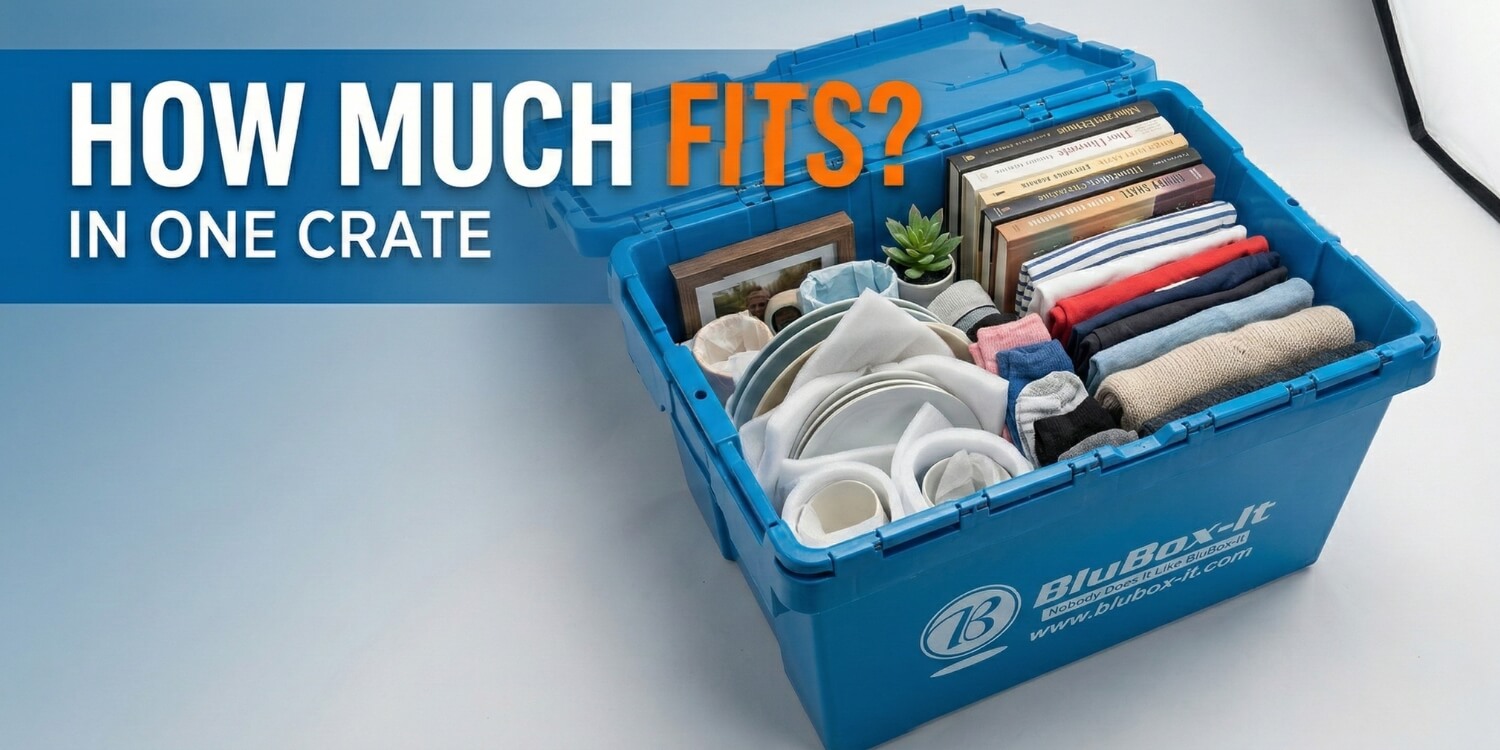
Moving can feel overwhelming. Between organizing your things, sorting what to keep, and making sure nothing gets damaged, there’s already enough to think about. That’s one reason many people choose plastic moving boxes. They’re sturdy, stack neatly, and don’t require tape or complicated assembly. Plus, you don’t have to stress about them getting soft or falling apart if they’re exposed to moisture.
But one common question always comes up: how much can you actually fit in a plastic moving box?
Understanding the Capacity of Plastic Moving Boxes
Plastic moving boxes are designed to be strong and structured. Unlike cardboard, they don’t flex or bulge. That means what you see is what you get in terms of space. While you can’t overstuff them the way some people do with cardboard boxes, that’s actually a benefit.
Overpacking leads to heavy boxes, broken bottoms and sometimes even injuries. Plastic boxes help prevent that because they maintain their shape and encourage you to pack within a safe limit.
A standard plastic moving box is usually around 27 inches long, 17 inches wide and 12 inches high. This size is practical. It’s large enough to hold a good amount of items but not so big that it becomes too heavy to lift safely.
What Fits Inside One Plastic Moving Box?
You can fit quite a bit inside a single plastic moving box, depending on what you’re packing.
For example, one box can usually hold:
- Kitchen items like pots, pans, utensils, and pantry goods
- Folded clothing from a dresser drawer
- Books (without making the box too heavy if packed properly)
- Bathroom supplies and small appliances
- Office supplies and paperwork
Because the box has firm sides, it’s easier to stack items neatly. You can maximize space by placing heavier items at the bottom and lighter ones on top. Since the shape stays consistent, stacking boxes during transport is also much safer.
Why You Shouldn’t Overpack
Even though plastic boxes are durable, weight still matters. Just because a box won’t break doesn’t mean it should be packed to the top with heavy items.
For example, filling a box entirely with books might technically fit, but it could become difficult to carry. A better approach is to mix heavier and lighter items in each box. This keeps the weight manageable and protects your belongings during loading and unloading.
Plastic boxes naturally help with this because their size limits how much you can fit inside.
How Many Boxes Do You Really Need?
While each box can hold a solid amount of items, most moves require more boxes than people initially expect.
Here’s a general idea:
- Studio apartment: Around 20 plastic boxes
- One-bedroom apartment: About 30 boxes
- Two-bedroom apartment: Around 50 boxes
- Three-bedroom apartment: 50 boxes or more
- Larger homes: 65 boxes depending on storage areas
These numbers can vary. If you have minimal furniture and live simply, you may need fewer boxes. If you have a home office, lots of books, seasonal decorations, or storage areas like a garage or basement, you may need more.
Apartments vs. Houses
Apartments usually require fewer boxes because storage space is limited. Most apartments don’t have large attics, garages, or basements filled with extra belongings.
Houses are different. Closets, sheds, basements, and garages can significantly increase the number of boxes you’ll need. Even a small house can surprise you once you start packing.
It’s always better to order a few extra boxes than to run out halfway through packing.
How to Pack Efficiently
To get the most out of your plastic moving boxes, pack strategically:
- Keep similar items together
- Use soft items like towels or clothing to cushion fragile belongings
- Don’t leave empty gaps inside the box
- Avoid mixing very heavy items in one container
- Label each box clearly for easy unpacking
Because plastic boxes have flat lids and uniform shapes, they stack neatly in a moving truck. This makes loading more organized and reduces shifting during transport.
Is There a Packing Limit?
Technically, the packing limit depends more on weight than volume. A plastic moving box can usually handle 50–70 pounds safely, but that doesn’t mean it should be pushed to the maximum every time.
If a box feels too heavy to lift comfortably, it’s probably overpacked. The goal is safe and efficient moving — not testing the limits of the box.
Final Thoughts
Plastic moving boxes make packing simpler and more secure. They won’t collapse, they don’t need tape, and they protect your items better than standard cardboard. While they don’t stretch or expand, that fixed shape actually helps you pack smarter and safer.
Each box can hold a generous amount of everyday household items, but the total number you’ll need depends on the size of your home and how much you own. When in doubt, it’s always safer to have a few extra boxes on hand.
Moving is already a big task. The right packing system just makes it a little easier.