
10 Steps for an Eco-Friendly Move
Step 1: Plan Ahead
Eco-friendly practices are still not common in the moving industry. So, if you want to make your move as environmentally friendly as possible, you need to start planning earlier than you would for a normal move. Give yourself enough time to find eco-friendly moving companies, arrange sustainable packing materials, explore recycling options and handle other important tasks. Planning ahead can help you reduce waste, stay organized and avoid buying things you already own but cannot find. Pack your belongings carefully and keep the things you will need before moving day outside the boxes. This way, you won’t have to buy the same items again just because they are already packed.
Step 2: Look for Eco-Friendly Movers or Transportation
Some moving companies are now taking steps to make their services more environmentally friendly. They use fuel-efficient moving trucks, plant trees to help balance out their carbon emissions and follow other eco-friendly practices. This means you can now choose a moving company that cares about the environment and uses greener methods to move your belongings.
When looking for a green moving company, don’t just trust the eco-friendly words they use in their marketing. Instead, ask these questions to check how sustainable their moving services really are:
- Can you provide any references that show your company follows sustainable practices?
- Do you use reusable moving boxes and packing supplies?
- Do you use biodegradable packing materials?
- How do you make sure the entire move can be completed in just one trip?
- What other sustainable practices make your company different from other moving companies?
- If you’re planning a DIY move without hiring professional movers, you can still find ways to make transportation more eco-friendly. Instead of making several trips in your own car, consider renting a moving truck to transport all your belongings in one trip. Even if the truck is less fuel-efficient, making one trip is usually a more environmentally friendly option.
Step 3: Sell or Donate Unwanted Belongings
Instead of throwing away the items you don’t want to take with you when moving, take some extra time to sell or donate them. This can help reduce the amount of waste that ends up in landfills because of moving.
Step 4: Research Recycling Options
If you have unwanted items that you can’t sell or donate, check whether they can be recycled. Many organizations offer recycling services for old electronics, worn-out clothes, furniture and other items you might not expect to be recyclable.
Step 5: Use Eco-Friendly Packing Materials and Strategies
Packing materials are one of the most harmful parts of moving because many commonly used materials lead to deforestation and single-use plastic waste. By choosing eco-friendly packing materials and following packing strategies that reduce environmental damage, you can make your move more environmentally friendly.
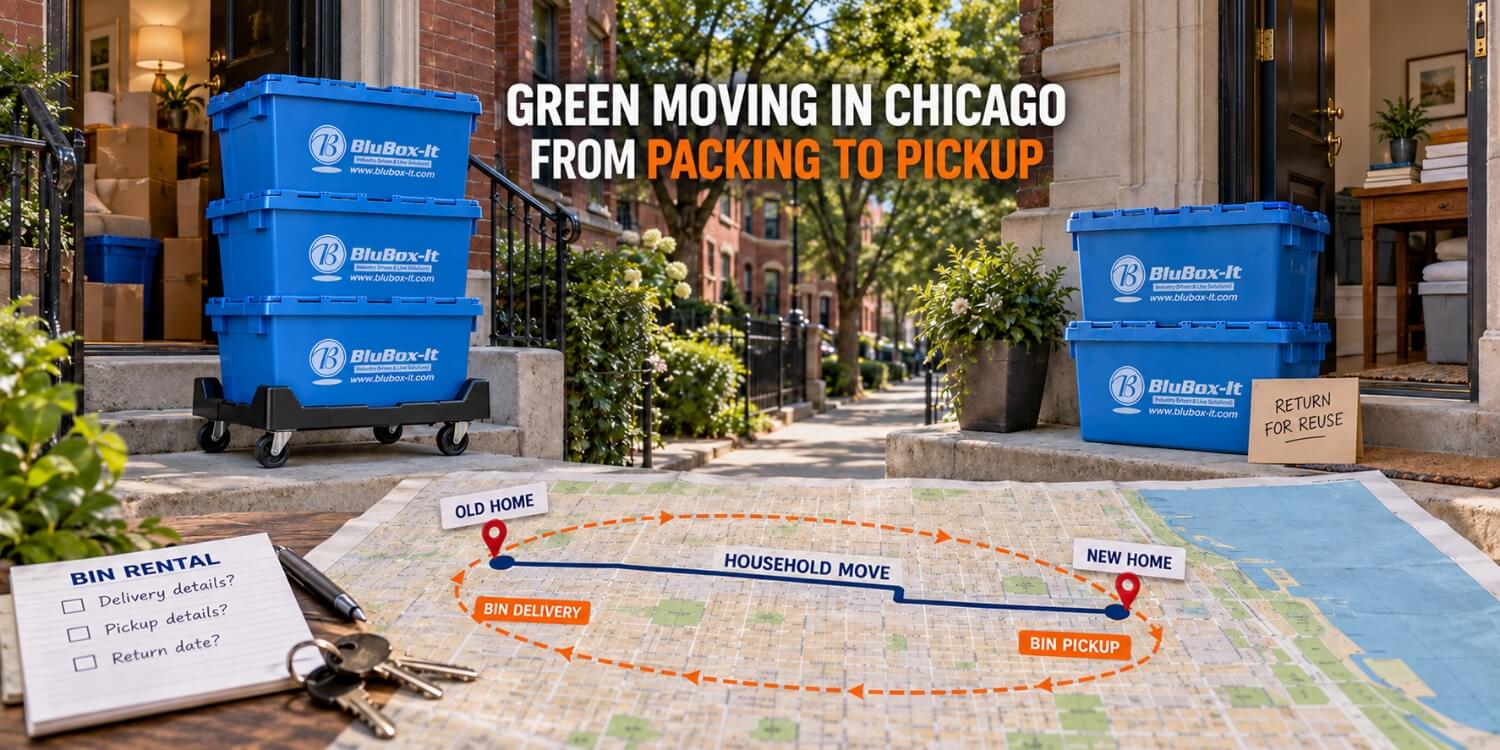
- Look for rentable, reusable plastic moving boxes. Our SmartPack system offers rentable boxes and bins that you can use during your move and return afterward for other households to use in the future.
- Using this system can reduce cardboard waste by an average of 80%.
- Get free boxes from local stores or reuse moving boxes from a previous move.
- Choose biodegradable packing supplies, such as packing peanuts made from cornstarch instead of Styrofoam.
- Use clothes, sheets, linens, pillows and blankets to protect fragile items instead of plastic bubble wrap. Recycled newspapers or magazines can also be a more environmentally friendly option.
- Pack your belongings in storage bins, baskets, drawers, totes, suitcases and other household items to reduce the number of cardboard boxes you need and create less waste during your move.
Step 6: Pack the Kitchen Last
Packing your kitchen even a few days before moving can create unnecessary waste from takeout food, paper plates, cups and plastic cutlery. Try to pack your kitchen at the last minute so you can continue using your own kitchen items for cooking and eating.
While packing your kitchen, pay attention to how much food waste you create. Plan your meals and shop carefully before moving so you don’t end up with too much perishable food that needs to be thrown away. Check if Move For Hunger or a similar organization is available in your community. They can pick up your non-perishable food items and deliver them to a local food pantry.
Step 7: Avoid Unnecessary Trips Back and Forth
Unfortunately, fuel is not very eco-friendly. The more trips you make back and forth to your new home, the greater your impact on the environment. Avoiding unnecessary trips and reducing travel between your old and new home is another way to make your move greener. Can you solve an issue by calling your landlord instead of making another trip? Could your neighbors help? By avoiding unnecessary trips, you can reduce fuel consumption and other emissions.
Step 8: Clean with Green Products
When moving out of your old home, you will usually need to clean it thoroughly. Instead of using chemical-filled cleaning products that come in single-use plastic containers, consider choosing eco-friendly and sustainable alternatives. Green cleaning supplies are becoming more popular, so there are now many options available. You can also make your own homemade cleaners using common household items.
Step 9: Store Belongings with a Neighbor
If you need storage space while relocating, consider one of the most eco-friendly self-storage options: free space in a neighbor’s home. Connect with a neighbor in your community who can help you store your belongings safely and at an affordable cost.
Step 10: Recycle Moving Supplies Once the Move is Over
Once your green move is complete, avoid simply throwing away the moving materials you no longer need. There’s a good chance someone else could reuse your moving supplies, so consider posting them on Facebook or OfferUp to give others a chance to use them.
After Your Move: Making Your New Home Green
Moving sustainably is one thing but as you unpack and settle into your new home, you can also take this opportunity to adopt some new eco-friendly habits. Here are seven steps you can follow to make your new home greener as you move in, unpack and get settled.
7 Steps for Making Your New Home a Green One
Step 1: Buy Used Furniture
Instead of buying new furniture, consider looking for second-hand furniture and other household items that you can reuse in your new home. Thrift stores, consignment shops and online marketplaces like Facebook and Craigslist are great places to find gently used items.
Step 2: Embrace a More Minimalist Lifestyle
Moving is also a great opportunity to declutter and downsize your belongings. Once you’ve reduced the number of things you own, try to avoid buying too many new items for your new home. Following a minimalist lifestyle means creating less waste and reducing consumerism which can be better for the environment.
Step 3: Use Eco-Friendly Home Decor
There are many ways to make your new home more environmentally friendly when decorating it. Choosing eco-friendly paints is a great place to start. Avoid decorations made from plastic or other unsustainable materials. Instead of buying mass-produced furniture from big-box stores, invest in locally made furniture.
Step 4: Invest in Energy-Efficient Appliances
If your appliances are getting old, it may be time to replace them. Many modern appliances are much more energy-efficient than older models. They are not only more eco-friendly but can also help you save money on energy bills in the long run.
When improving energy efficiency in your home, don’t focus only on appliances. Consider installing solar panels to produce your own energy. Use rechargeable batteries for small appliances and electronics. Also, make sure all the lights in your new home have energy-efficient LED bulbs.
Step 5: Create New Eco-Friendly Habits
Moving is a big change, so use this opportunity to make other changes that will help you live more sustainably. For example, learn how to make the most of recycling programs in your new community. Save water by choosing drought-resistant landscaping. You can also plant a garden and grow your own produce.
Step 6: Go Paperless
When updating your address for your new home, take some extra time to sign up for paperless billing and communications from any companies or organizations that regularly send mail to your home.
Step 7: Help Make More Moves Eco-Friendly with a Neighbor
Congratulations on making your move more sustainable! Now it’s your turn to help others in your community move in an eco-friendly way by renting out available space in your new home through Neighbor.