
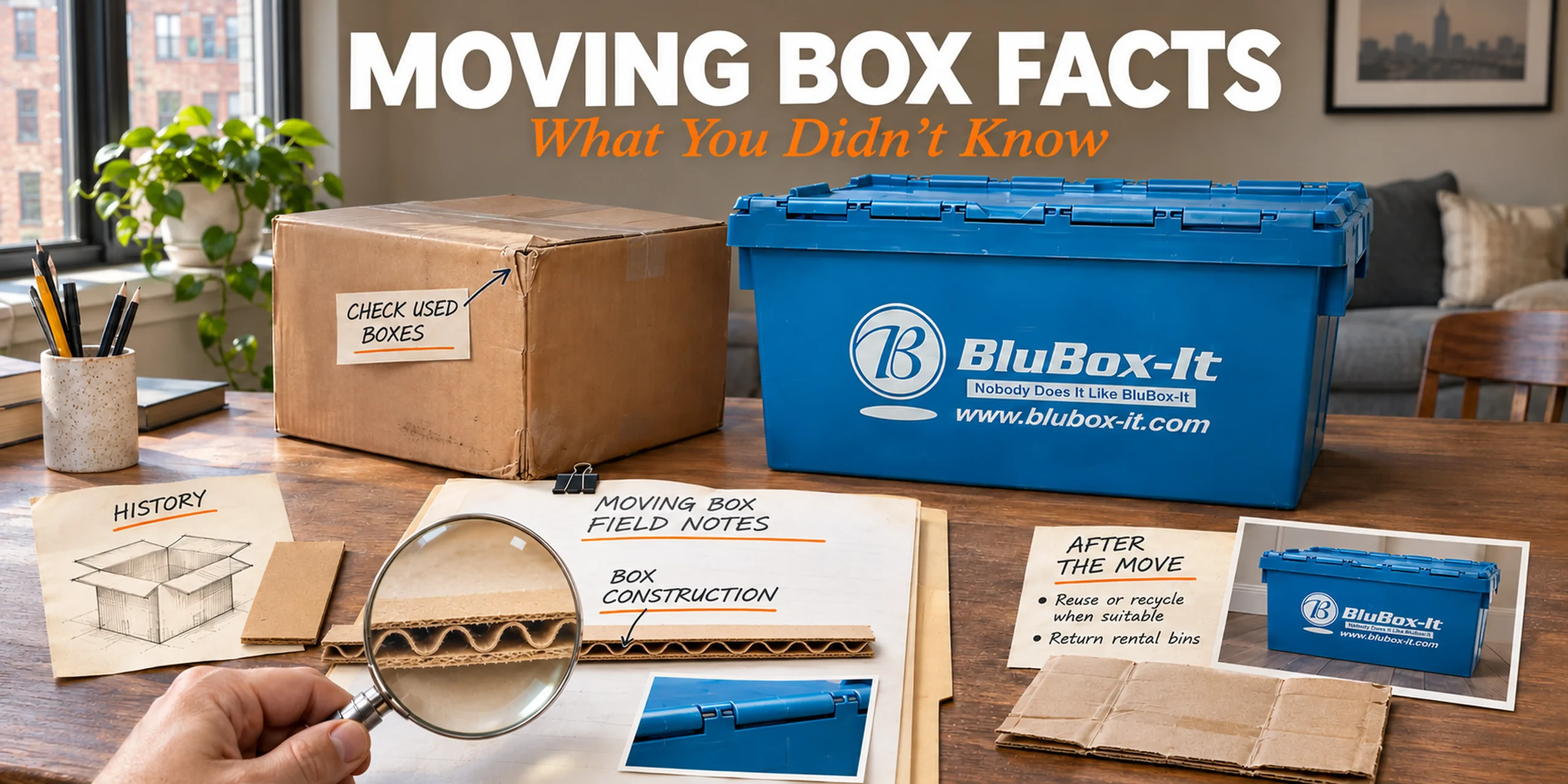
When you’re getting ready to move, you’ll probably need a lot of moving boxes and packing supplies. You might feel bad about all the waste but it may seem like something you can’t avoid. Many people try to save money by getting free moving boxes. However, these boxes can sometimes contain pet dander, dust or harmful chemicals that could get onto your belongings.
Moving boxes are often thrown away after being used only once and they end up in landfills. As more people move from one place to another, this creates a bigger problem for the environment. So, is there a way to reduce this waste? Let’s look at some facts about moving boxes and the alternatives that may be available to you.
How Moving Boxes Got Their Start
You might be surprised to learn that the first commercial cardboard boxes appeared in England in 1817. British industrialist Malcolm Thornhill is often credited with making them, although the exact history is unclear. Cardboard had already been used for packaging for many years but the early boxes were not very strong. It took several more decades before stronger, corrugated cardboard was developed into the type we use today.
By the end of the 19th century, cardboard boxes were widely used commercially and had become a common choice for moving. Since then, they have been mass-produced. By 2016, it only made sense to look for ways to improve, upgrade or reinvent the traditional moving box.
You Can Usually Get Them for Free but at a Different Cost
Today, many people are looking for smart ways to save money and getting free moving boxes is a great way to do that. Sometimes, grocery stores give away free boxes or people who have recently moved offer their used boxes for free. Unfortunately, using free boxes comes with some risks, as you never know if they have been exposed to pet dander, pests, harmful chemicals or even a bed bug infestation.
The Various Types of Moving Boxes
Moving boxes have changed a lot since the mass production of corrugated cardboard boxes began in 1890. Today, you can find boxes in different shapes and sizes, with varying levels of thickness and different uses. As mentioned earlier, moving boxes have needed a fresh design for a long time and today, that change has finally happened.
Moving boxes have now evolved into eco-friendly plastic containers that offer a better moving experience. These containers are more durable, water-resistant and easy to use. You can rent or buy them for your move, making it easier to pack, stack and protect your belongings.
How Renting Boxes or Moving Crates Could Save Our Landfills
Not only do these moving crates help you avoid chemicals, high costs, the extra hassle of assembly and outdated moving methods, but they also offer another way to help protect the planet. Traditional moving boxes are usually bought at a high price, assembled, packed, moved and then thrown away after the move. This adds more waste to our landfills because many people don’t recycle their boxes, while others have boxes that can no longer be recycled due to tape and ink. Using recycled and reusable crates and packing supplies could help reduce waste in our landfills.
You probably didn’t know how cardboard moving boxes first started and how they have changed over time. Today, modern moving containers offer a much better alternative to the traditional boxes you’ve always used. To make the switch, contact BluBox-It today and get your own green moving boxes!