
If you’re moving tomorrow, packing can quickly turn into a stressful situation. Many people think they have more time than they actually do, and before they know it, they’re rushing through everything at the last minute. This often leads to confusion, missed items, and unnecessary panic. The truth is, packing always takes longer than expected—especially when you’re not fully prepared. The good news is that with the right approach, you can still get everything done quickly and stay in control. This guide walks you through a fast, practical way to pack when time is not on your side.
Why Last-Minute Packing Gets Out of Control
Last-minute packing usually becomes overwhelming because it doesn’t start with a clear plan. Many people delay packing, thinking they’ll handle it later, but that delay quickly catches up. When it’s finally time to pack, there often aren’t enough supplies, and things begin to feel scattered.
Without a structured approach, it turns into a rushed process where items are packed randomly. This leads to misplaced belongings and wasted time. Instead of moving forward smoothly, you end up going back and fixing mistakes, which slows everything down even more.
What Actually Slows You Down the Most
A lot of time is lost on small tasks that seem simple but add up quickly. One of the biggest delays comes from searching for boxes when you should already be packing. Then comes assembling those boxes, which takes more time than expected.
Running out of tape or packing materials forces you to stop and find more supplies. On top of that, weak or damaged boxes often need to be repacked, which means doing the same work twice. All of these things break your momentum and make the process feel longer than it should be.
How Long Does Packing Really Take?
Packing isn’t a quick task, even for smaller homes. A one-bedroom apartment can take several hours to pack properly, while a full house may take one to two days depending on how organized you are. Most people underestimate this because they don’t account for interruptions, sorting, and packing fragile items carefully.
Delays build up when you stop to make decisions or fix packing mistakes. What seems like a simple task at first can stretch into a much longer process if you’re not working efficiently.
What to Pack First When You’re Short on Time
When time is limited, it’s important to start with the right items. Begin with essentials—things you’ll need immediately after the move should be kept separate and easy to access. After that, focus on heavier items so they are packed and secured early.
Frequently used items should be packed last so you can still use them while you’re finishing up. Working room by room also helps keep everything organized and prevents items from getting mixed up.
How to Pack a House in One Day
Packing a house in one day is possible if you stay focused and avoid overthinking. Start by prioritizing rooms based on importance, and move quickly from one space to the next. Don’t spend too much time sorting every item—this is about speed, not perfection.
Using uniform containers can help you stay organized and stack everything easily. As you go, label boxes quickly so you know where things belong later. The goal is to keep moving forward without stopping for small decisions.
The Fastest Way to Pack When Time Is Limited
When you’re short on time, the fastest approach is to use a system that doesn’t require extra setup. Ready-to-use packing solutions can remove several steps from the process. There’s no need to build boxes or spend time taping them together.
These systems are designed to stack easily and stay organized, which also makes loading faster. By removing unnecessary steps, you can focus on packing instead of preparing materials.
Why Traditional Packing Methods Slow You Down
Traditional packing methods often slow you down because they involve too many steps. First, you have to assemble boxes, then secure them with tape, and later reinforce them if they feel weak.
Cardboard boxes can lose their shape or break under pressure, which leads to repacking. You also need multiple supplies like tape, markers, and fillers, and running out of any of these can interrupt your progress. All of this adds extra time to a process that should be simple.
A Smarter Packing System That Saves Hours
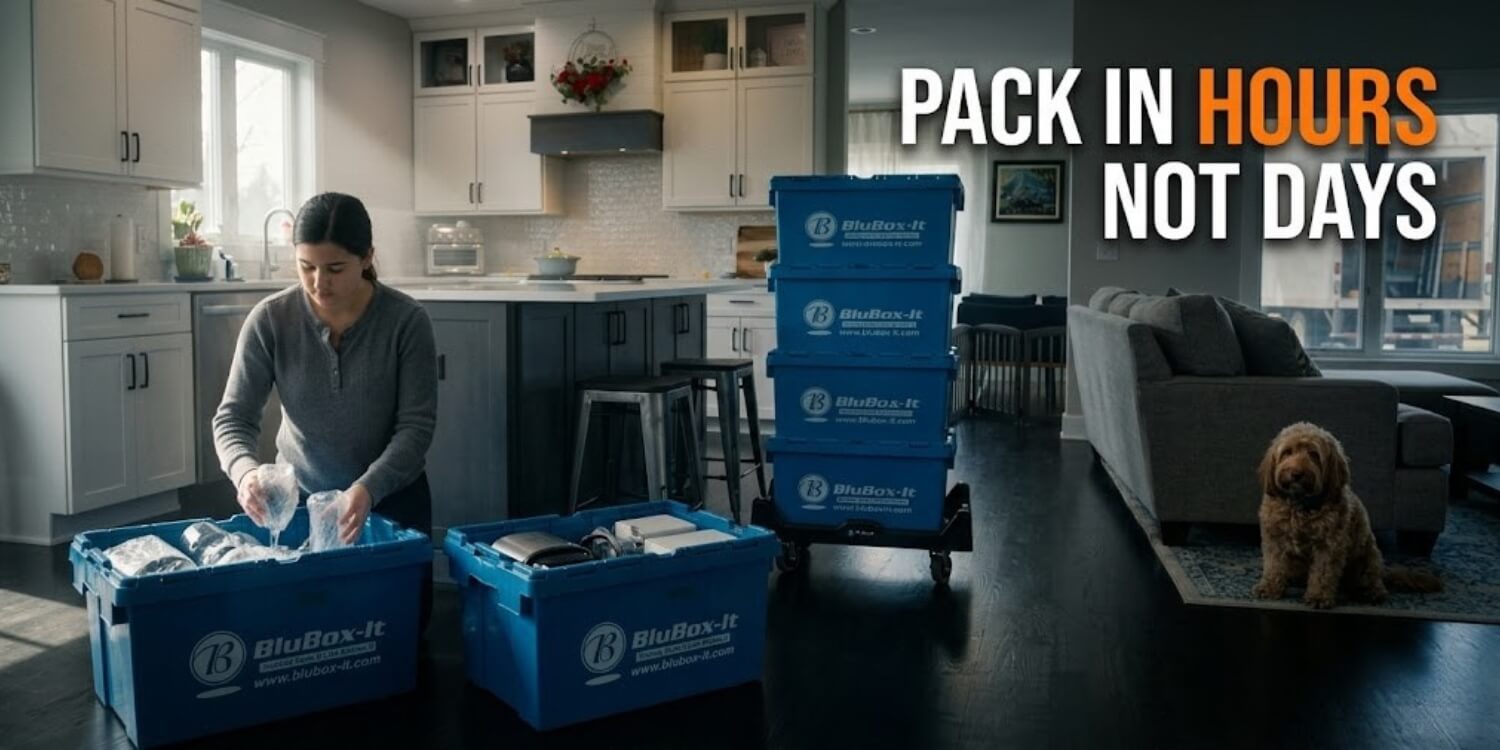
A more efficient approach is to use a packing system that’s ready from the start. Reusable plastic moving bins that arrive at your door and are already set up remove the need for preparation. You don’t have to worry about tape, and everything is ready to go right away.
Because they are sturdy and stackable, they help keep your items organized and secure. This makes both packing and loading faster, especially when you’re working under time pressure.
What We See on Real Moving Jobs
In real moving situations, last-minute packing is often where things go wrong. Many delays happen because people run out of boxes or don’t have enough supplies. This forces them to stop in the middle of packing and look for solutions.
Disorganized packing also slows down the loading process. When items aren’t grouped properly, it takes longer to move everything into the truck. These small issues can turn a quick move into a long and stressful day.
Quick Packing Tips When You’re in a Rush
- Pack items by category instead of overthinking every box
- Keep moving and avoid going back to rearrange things
- Use clear labels so you know where everything goes
- Set aside essentials so they’re easy to find later
When This Approach Works Best
This method works well for apartment movers who need to pack quickly without much space. It’s also helpful for families who have a lot to manage in a short time.
Office relocations can benefit from a faster system to reduce downtime. Busy professionals who don’t have time to deal with complicated packing steps can also rely on this approach to stay efficient.
Frequently Asked Questions
How fast can you pack a house?
It depends on the size, but with the right approach, many homes can be packed within a day.
What is the quickest way to pack for moving?
Using a simple system with ready-to-use containers helps save the most time.
Can you pack everything in one day?
Yes, if you stay focused, avoid over-sorting, and follow a structured plan.
Conclusion
When you’re moving tomorrow, every minute matters. Running out of time can quickly turn packing into a stressful experience, especially when you’re dealing with too many steps and not enough organization. A simple, ready-to-use packing system can make a big difference by saving time and keeping everything in order. Instead of struggling with last-minute chaos, you can choose a faster and more efficient way to pack. Keep things simple, stay organized, and make your move as smooth as possible without unnecessary stress.