
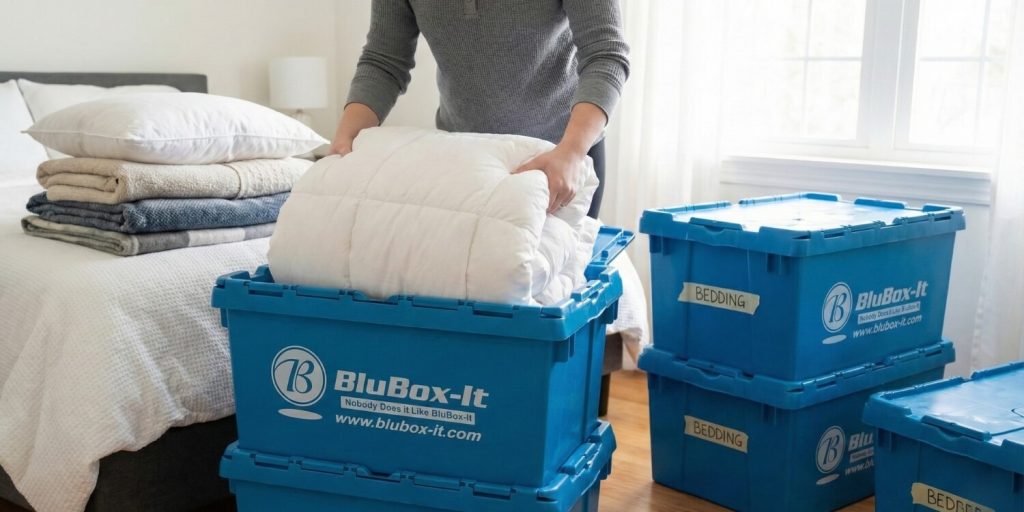
Packing your bedding might seem like a simple step in the moving process, but comforters can become challenging due to their bulky and lightweight nature. They take up a surprising amount of room, and improper packing can lead to wasted space or even damage. Your main goal should be to prepare them in a way that keeps them clean, compressed, and easy to transport.
The most effective method for packing comforters is to fold them neatly, place them into a vacuum-seal bag, and store them in a sturdy moving box or bin. Removing the excess air keeps them compact and easier to stack inside your containers. If vacuum bags aren’t available, large trash bags can still work as long as you push out as much air as possible before sealing them.
For renters or homeowners who prefer using durable supplies during their move, companies like BluBox-It offer strong container options that help protect bedding and other soft household items. Their durable equipment makes it easier to handle bulky comforters while keeping them safe from dust or moisture.
In this guide, we’ll show you the best ways to pack comforters effectively so they stay fresh, secure and organized during your relocation.
How to Pack Comforters for Moving Like a Pro
The best way to pack comforters is to leave them for the end of your packing process. Since they are fluffy and take up a lot of space, packing them too early limits the available room you need for smaller or heavier belongings. By packing them last, you ensure everything else is organized first, and you can also use your comforters as padding when needed.
1. Sort and Clean Your Comforters
Always start by washing and thoroughly drying your comforters. Even a small amount of moisture can cause mold or unpleasant smells during a move. This is also a great opportunity to remove any bedding you no longer need, which helps reduce clutter and saves space.
2. Gather the Necessary Supplies
Your packing process will be smoother if you have everything you need ahead of time.
You’ll want to gather:
- Strong moving boxes or bins
- Vacuum storage bags
- Packing tape
- Packing paper for a clean base
- A permanent marker for labeling
- Dryer sheets or sachets for freshness
Using the right supplies ensures your comforters remain clean and protected throughout the move.
3. Fold the Comforter Neatly
Folding your comforter carefully prevents awkward lumps and makes compression far easier. Neat folds also help reduce trapped air that takes up unnecessary space.
4. Use Vacuum-Seal or Compression Bags
Vacuum-seal bags are the best way to shrink down bulky bedding. Insert the comforter, seal the top, and remove the air until it flattens. This makes the comforter easier to pack and protects it from moisture or dust. If you don’t have vacuum bags, press the air out of a large trash bag before sealing it.
5. Place Comforters in Moving Boxes or Plastic Bins
Once compressed, place your comforters inside a sturdy container. Many people prefer using plastic moving crates because they hold their shape well and provide reliable protection during long-distance moving. You can also combine comforters with blankets and other soft bedding to optimize space inside each container.
6. Label Boxes Clearly for Easy Unpacking
Write the contents and destination area on each box, such as “Comforters – Master Bedroom.” This helps you stay organized and speeds up unpacking. If a comforter is used as padding around fragile items, label the box accordingly to ensure careful handling.
7. Keep One Comforter Accessible for Immediate Use
Moving can be exhausting, and having at least one comforter available ensures you don’t have to dig through boxes just to get comfortable that first night.
The Best Packing Techniques for Comforters When Moving
Packing comforters the right way can save you space, time, and stress on moving day. These techniques help ensure your bedding stays in perfect condition.
Use Vacuum Storage Bags for Space-Saving
Compressing comforters helps drastically reduce their size, allowing them to fit neatly inside containers. This technique is especially useful when you have multiple comforters to pack.
Pack in a Sturdy Box or Duffel Bag
Comforters are soft but need secure storage to stay clean. Heavy-duty boxes, duffel bags, or durable bins all help protect bedding during transport. Many movers appreciate the reliability of reusable moving boxes because they withstand stacking and handling without bending.
Avoid Overstuffing the Box
Trying to fit too much into one container can damage both the box and the comforter inside. Leave enough space to avoid pressure or tearing.
Seal the Box or Bag Securely With Packing Tape
After packing, seal the container tightly to protect your comforter from dirt, dust, and shifting. Proper sealing ensures nothing spills out and keeps everything well contained until unpacking.
How Do You Pack Linens & Bedding?
Soft goods like linens and bedding need proper care to stay fresh during a move. Each type of item requires a slightly different approach.
How to Pack Bedding for Moving
Fold blankets, duvets, and pillows neatly. Then place them in vacuum-seal bags to minimize their size. If you prefer not to use vacuum bags, trash bags can also add a layer of protection. Pack these items last so they’re not crushed under heavier belongings.
How to Pack Linens for Moving
Sheets, pillowcases, duvet covers, and mattress pads fold down easily. A medium box generally holds all of them, but use a larger box if needed. Many people place linens inside a clean plastic bag before storing them to keep them fresh.
How to Pack Towels for Moving
Sort your towels by size, then fold or roll them to save space. You can also use towels to fill gaps in boxes and cushion breakable items.
5 Tips for Packing Bedding and Linens
Keep these helpful tips in mind while packing:
- Use large boxes or bins for bulky bedding.
- Line box bottoms with packing paper for extra protection.
- Place linens in plastic bags to keep them clean.
- Fold bedding carefully to save space.
- Pack bedding last to avoid crushing or excessive wrinkling.
Where to Find the Best Moving Boxes?
When gathering moving boxes, you have several options:
- Friends and Family: A free option but unpredictable in quality
- Online Retailers: Convenient but can be expensive
- Moving Companies: Some offer boxes, though durability varies
- Rental Services: Affordable and often more durable, especially if you prefer reusable containers
What Size Moving Boxes Do You Need?
Different household items require different box sizes for the best fit:
- Small Boxes: Ideal for heavy, compact items
- Medium Boxes: Great for folded linens, towels, and clothes
- Large Boxes: Best for lightweight, bulky items like comforters and pillows
Choosing the right size ensures easier lifting and better protection.
Need a Reliable Way to Pack Comforters for Moving?
Packing comforters the right way ensures they remain clean, protected, and easy to unpack. Using vacuum bags, sturdy boxes, and moisture-resistant containers makes a major difference—especially on long-distance moves or during changing weather conditions.
Taking simple steps like avoiding damp environments and using breathable containers can help keep bedding in great shape. Monitoring weather conditions on moving day also prevents unnecessary exposure to moisture.
If you still have questions or want extra packing assistance, BluBox-It has knowledgeable staff, durable rental containers and protective materials designed to make moving easier.
Frequently Asked Questions
What’s the Best Way to Pack Down a Comforter for Moving?
Use a vacuum-seal bag to compress the comforter, then place it in a sturdy box or bin to protect it from moisture and dust.
How Can You Tightly Pack a Comforter Without Damaging It?
Fold it neatly, remove air using a vacuum-seal or trash bag, then secure the container to keep the comforter in place.
What’s the Proper Way to Pack Blankets for Moving?
Fold blankets flat and use compression bags if available. You can also place them in plastic bags for added protection before packing them into boxes.
How Should Sheets and Comforters Be Stored Safely?
Store them in a cool, dry space away from sunlight. Use breathable containers and make sure everything is fully dry before packing.
Should You Pack Pillows in Boxes or Bags When Moving?
Large bags or vacuum-seal bags work best. Pillows can also be used as soft padding around fragile items if wrapped properly.